
 Image 1 of 5
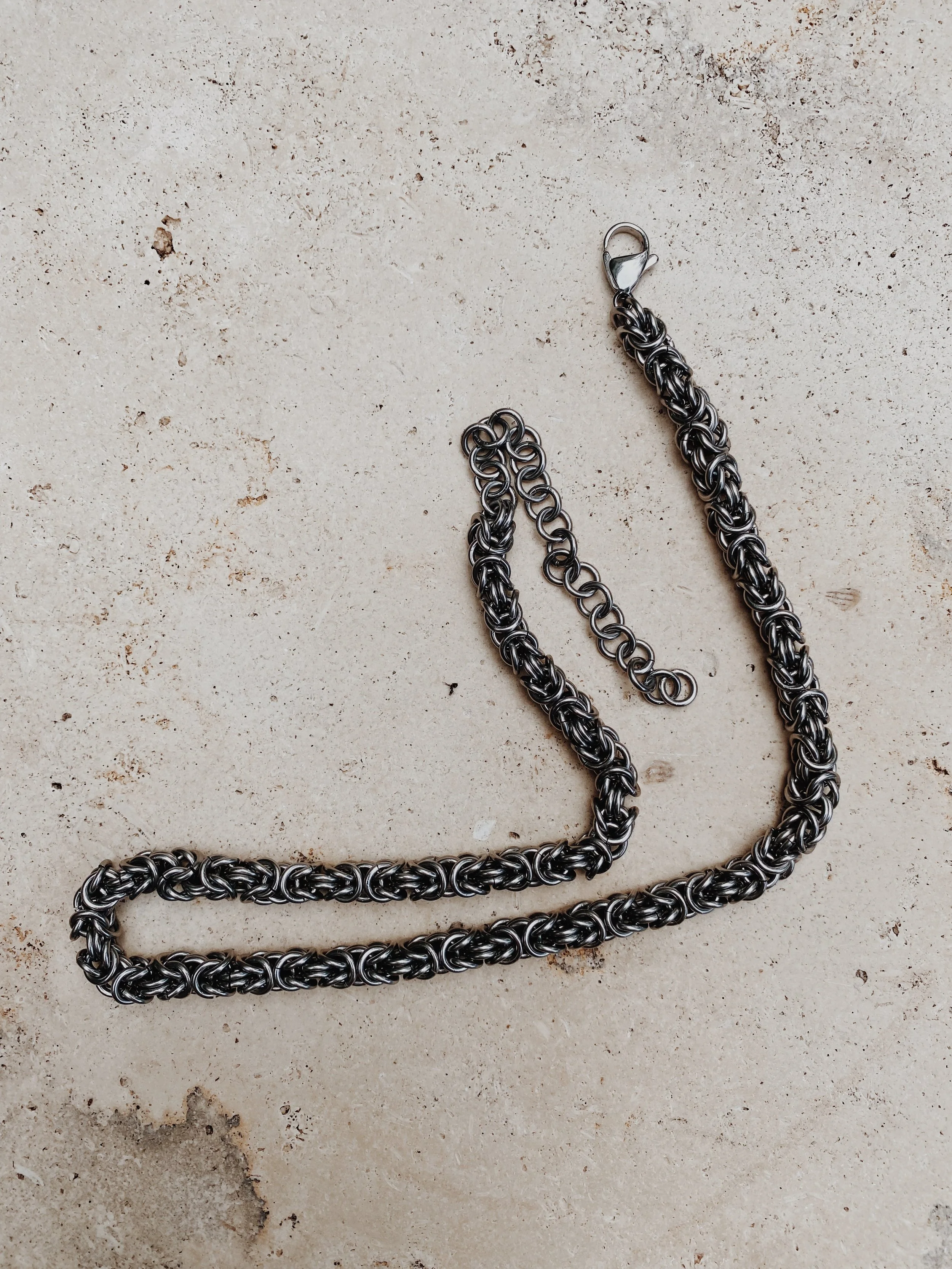 Image 2 of 5
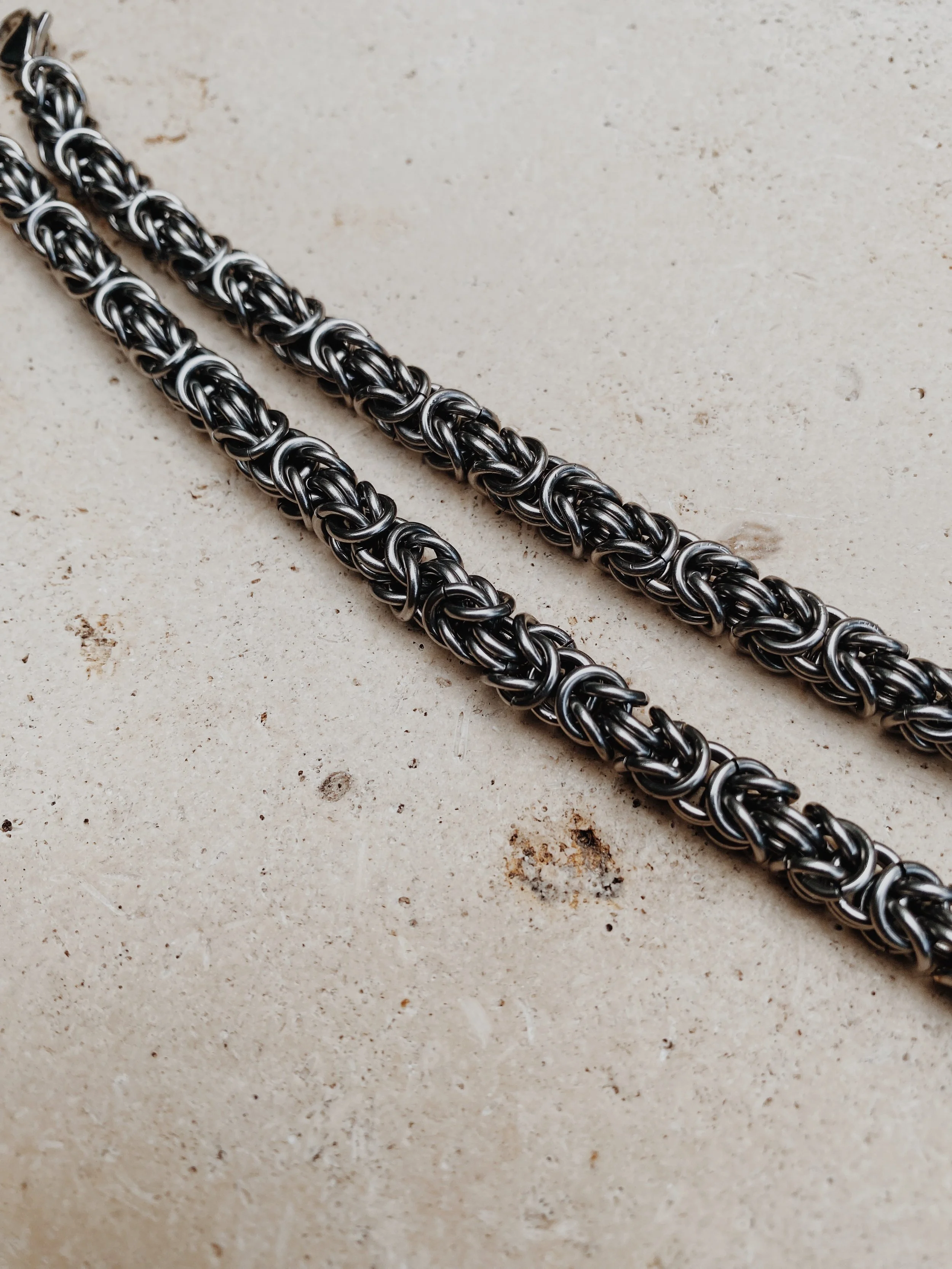 Image 3 of 5
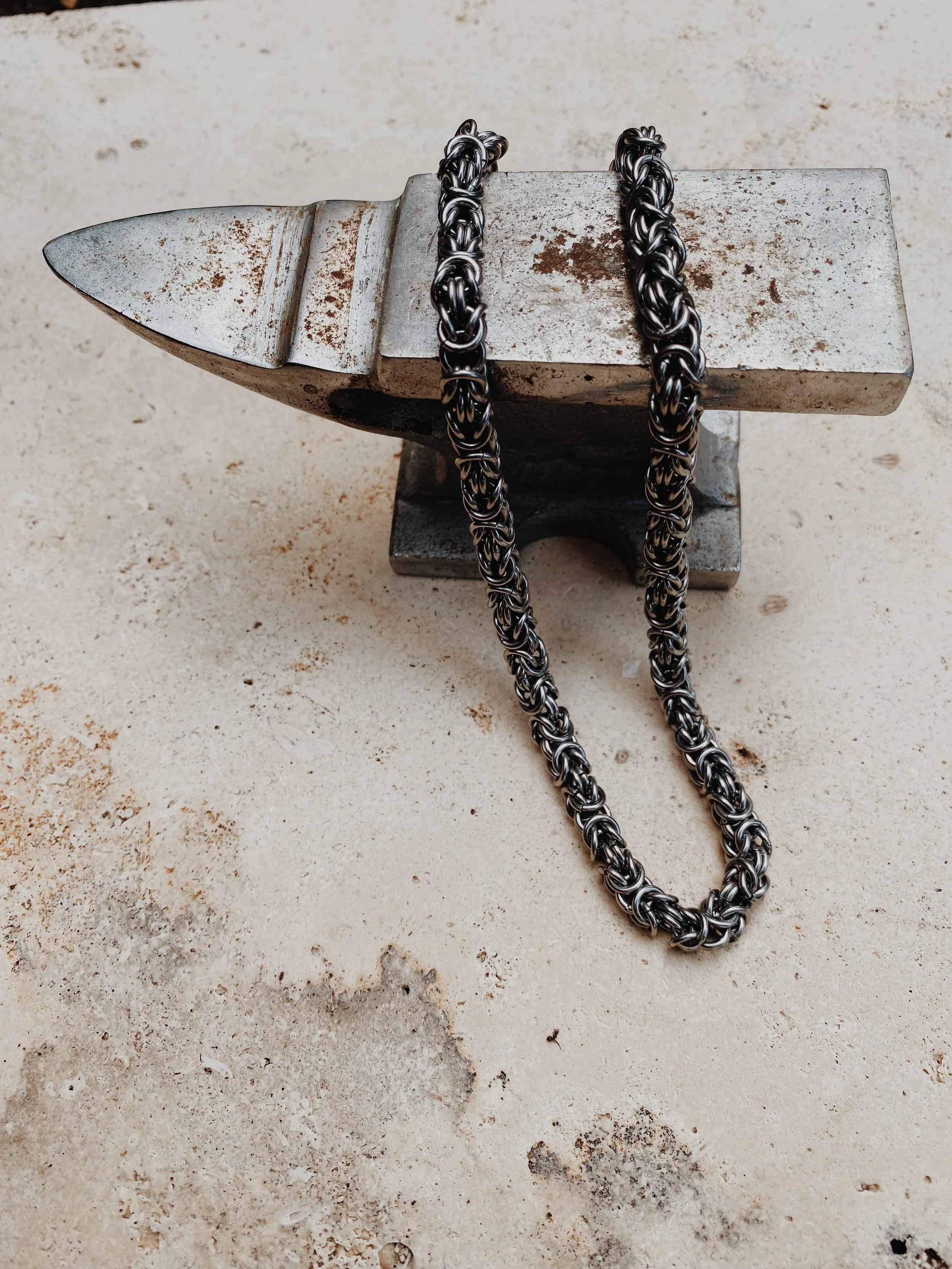 Image 4 of 5
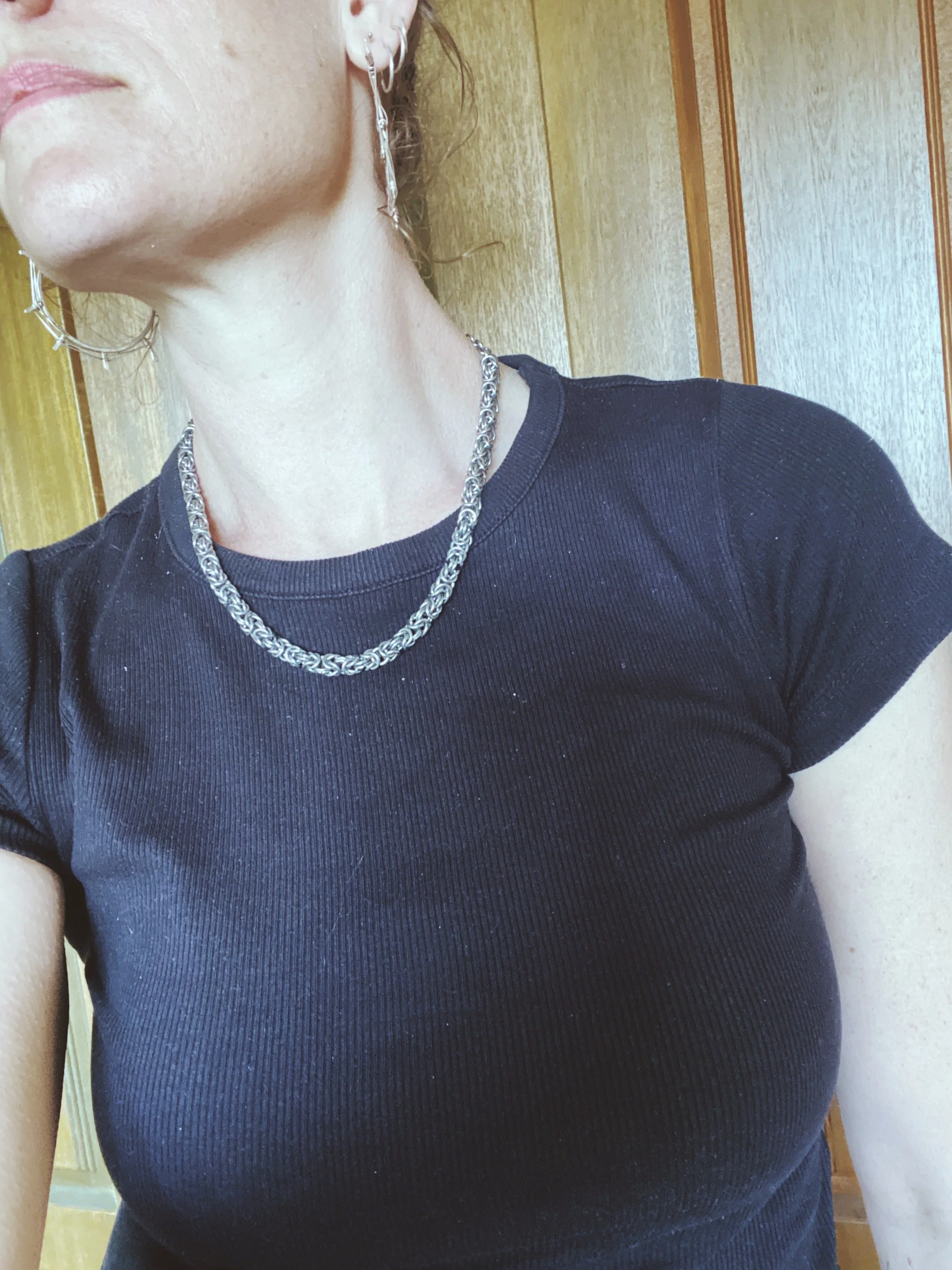 Image 5 of 5
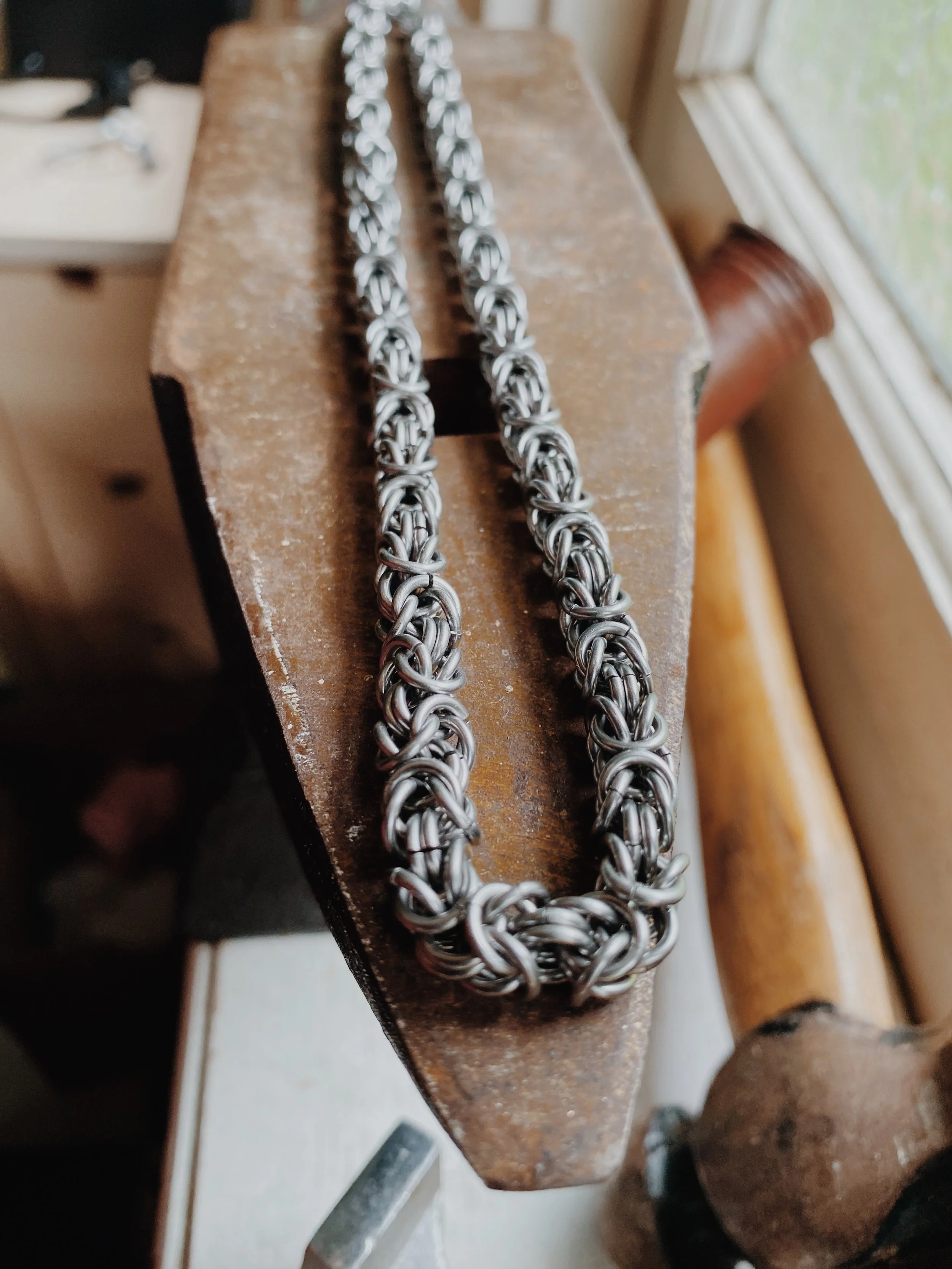
This beautiful chain has incredible texture and movement, feels like a serpent. Made from stainless steel it’s just like your favourite cereal - not too heavy, not too light.
This chainmaille weave is called “Byzantine” for its evocative nature, conjuring images of intricacy, patience and opulence. However there is no arecological evidence that it existed in the Byzantine era. In reality the weave most likely originated in Italy in the medieval period and, unlike other chainmaille weaves which were used for combat and protection, this weave was almost exclusively used for jewellery and decoration.
I can stare at this pattern and play with this deliciously tactile chain all day.
This beautiful chain has incredible texture and movement, feels like a serpent. Made from stainless steel it’s just like your favourite cereal - not too heavy, not too light.
This chainmaille weave is called “Byzantine” for its evocative nature, conjuring images of intricacy, patience and opulence. However there is no arecological evidence that it existed in the Byzantine era. In reality the weave most likely originated in Italy in the medieval period and, unlike other chainmaille weaves which were used for combat and protection, this weave was almost exclusively used for jewellery and decoration.
I can stare at this pattern and play with this deliciously tactile chain all day.